If you're working with AI now daily, there will have been times where you wished your computer could carry on for you when you leave the room.
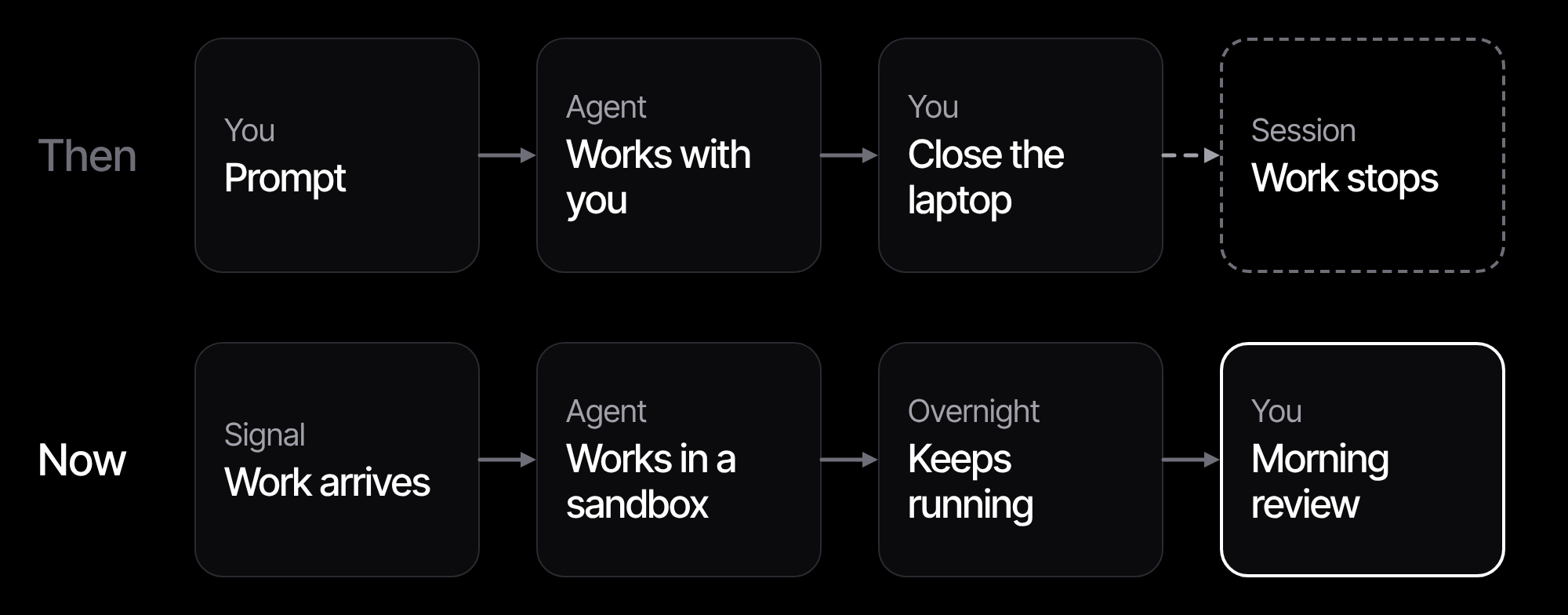
The last 12 months have been pretty crazy, and most of it has been about removing that limit, so our agents keep going after we close our laptops.
One thing I am convinced about heading into 2027 is that agents are going async. We are moving to "always-on agents".
The questions we ask now compared to this time a year ago are different. From what work we should do collaboratively with agents, to what work we are comfortable with agents doing proactively 24 hours a day.
Peter Steinberger kicked this off with OpenClaw at the start of this year (remember that?). He then joined OpenAI in February.
In March, Jensen Huang, then CEO of Nvidia, said:
If you look at OpenClaw and the adoption of it, you know, Linux took, right, some 30 years to reach this level. OpenClaw in, what is it, 3 weeks, has now surpassed Linux. It is now the single most downloaded open source software in history, and it took 3 weeks.
The race has been on ever since.
SpaceXAI's Grok Bot went first in August, followed by OpenAI's Dots in September and Anthropic's Claude Duet in October.
At OpenAI DevDay in London, Fabian Hedin, Lovable's CTO, walked through how their agents have changed (he covers the same ground in his AI Engineer CODE talk).
Lovable used to give its agents a 30-minute "time limit". Now? "10 hours plus", in forkable sandboxes, each with its own computer.
The "always-on" agent era is here, and what comes with it is yet another shift in the way we are working.
The AI hype ladder
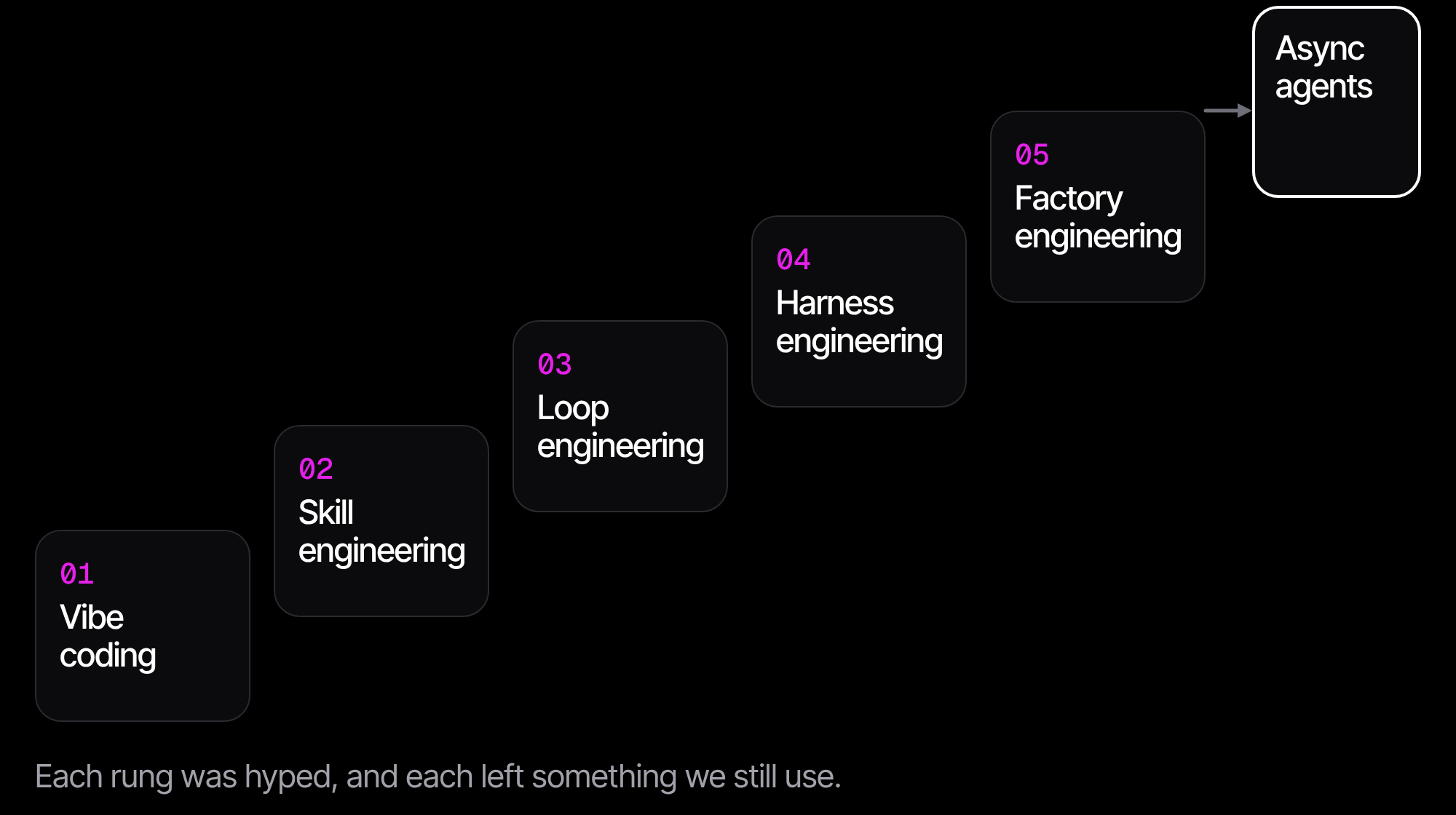
It's hard to keep up. Vibe coding, then skill, loop, harness and now, factory engineering - we have been through all of them in just the last 12 months.
Each promised to be "the new" discipline.
Each one was hyped - and each one left something we still use.
It shows the progress not only of the models, but of the workflows we are now building around them.
When we trust the workflows and the outputs more, we leave them to continue and move on to the next thing.
When they're finished with their goal, we are at the point now where it's more of a cursory "check" than a full review.
One thing with all of this is clear to me: these workloads are outliving our local laptops.
Running several sessions in parallel, across areas and projects, for hours on end is now normal.
The "pair programmer" era is coming to an end.
Each step of the ladder has got us to the point where we can now reasonably engineer systems that allow agents to run 24/7 with their own computer, in secure sandboxes.
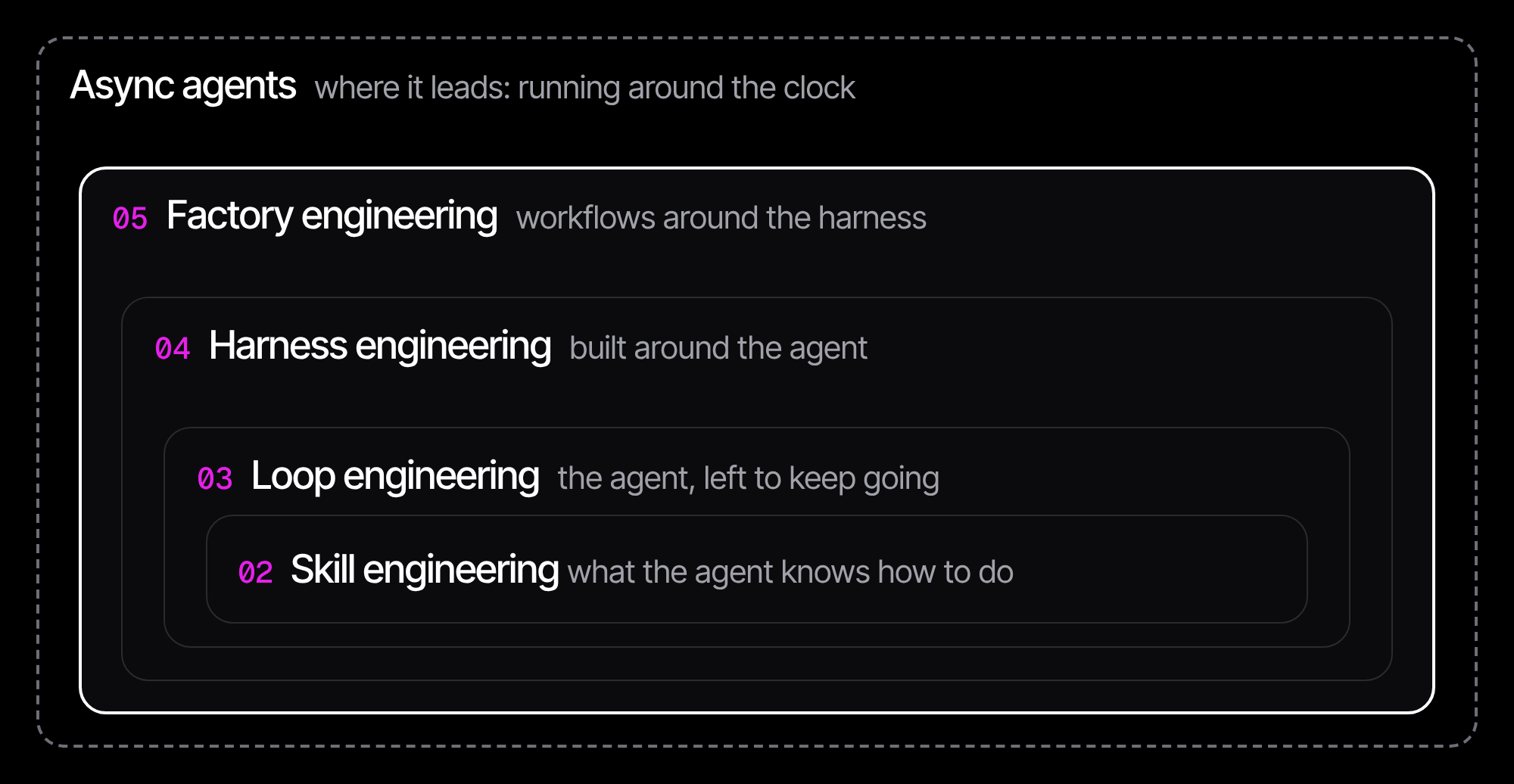
What an AI factory is
Some will call it hyperbole, but I truly believe factory engineering is the biggest disruptive wave for any AI-native company.
Software factories are everywhere on social media, especially X, but much like harness engineering did - I think that factories will go vertical.
We will engineer workflows and orchestration around the harnesses we build, just like we did with the harness around the agent.
The Industrial Revolution took work that people did in homes and small workshops and brought it together in factories, where people and machines handled different stages of production.
I think we're seeing a similar shift with AI. So far, most of us have used agents to get more done at our own desks.
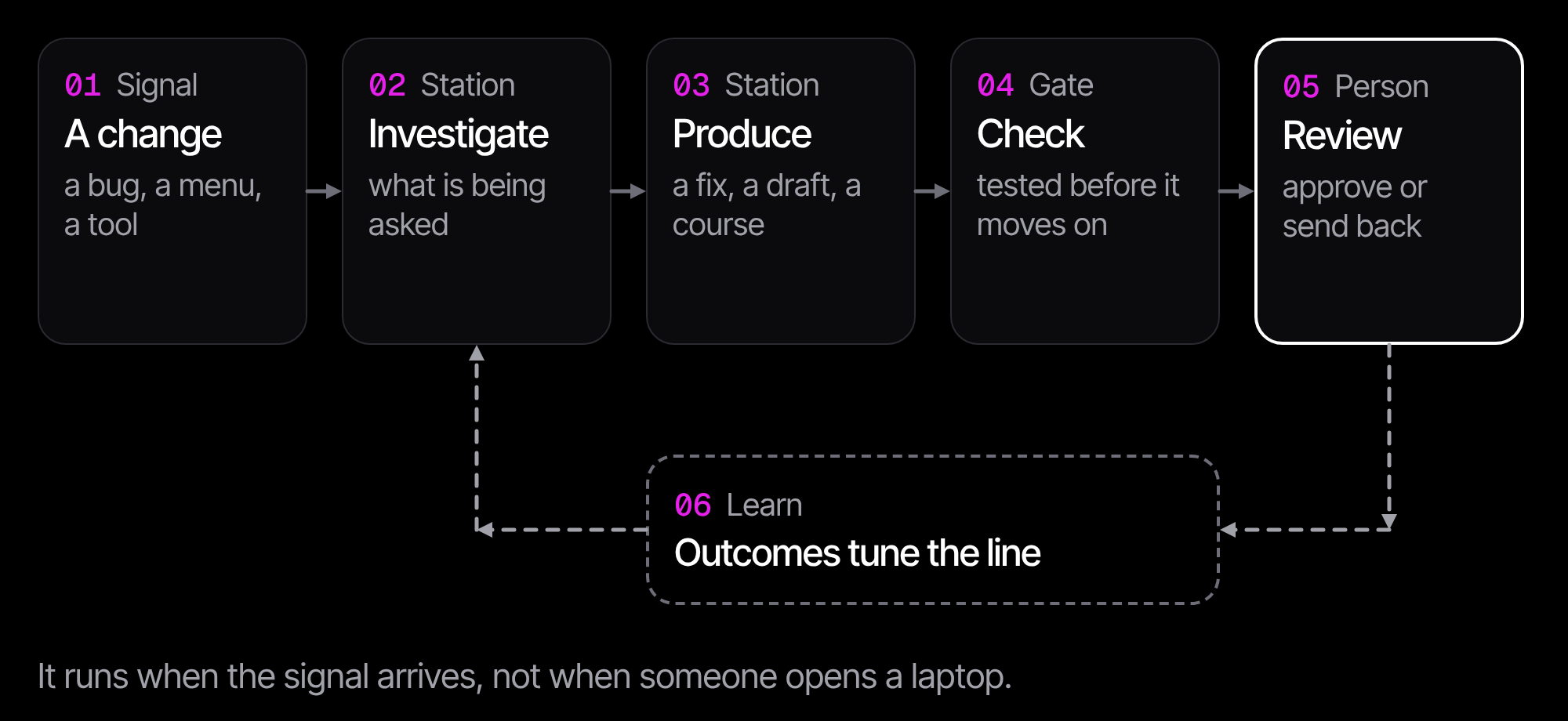
An AI factory takes the next step - work comes in, agents run it through a set process, and the result goes to a person to review. When a bug is reported, there is a process for investigating it, testing a fix and handing it to a person to sign off.
The same goes for other kinds of work.
When a restaurant changes its menu, a marketing factory could draft the website update, an email and a social post for the owner to approve.
When a company rolls out a new tool, a training factory could turn its documentation into a short course for someone on the team to try.
Isolating workflows as a set of factories means full control over what gets done, when it gets done and how it gets done.
It's easier to change the behaviour of a factory station than it is to change the behaviour of your entire team.
Why should the limit of building be when teams close their laptops for the day, and their agent sessions stop?
If we are talking about the AI equivalent of an industrial revolution, then this is what it looks like.
Build a factory (with Pydantic AI)
This should be any serious leader's goal for 2027.
Take a part of your process that agents and your team run today while laptops are open, and have an agent run it on a night shift.
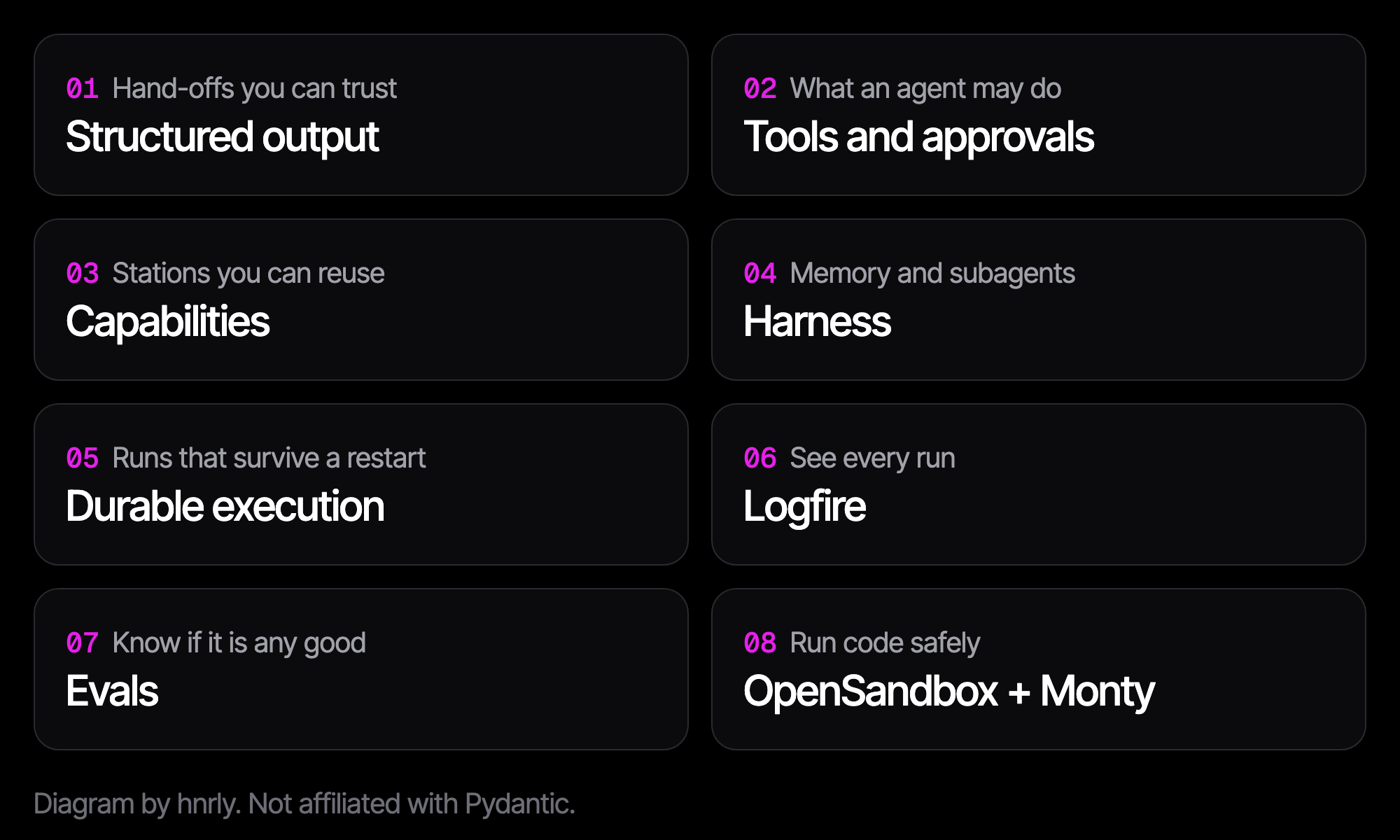
I have been building with Pydantic AI since January 2025, through two major versions.
Pydantic AI along with the pydantic-ai-harness should give you everything you need to be able to build your own factory.
If you don't want to build your own, then follow along with The Software Factory series as I build out my opinionated take on AI factories on top of Pydantic AI with pydantic-ai-factory (an independent project, not affiliated with Pydantic).